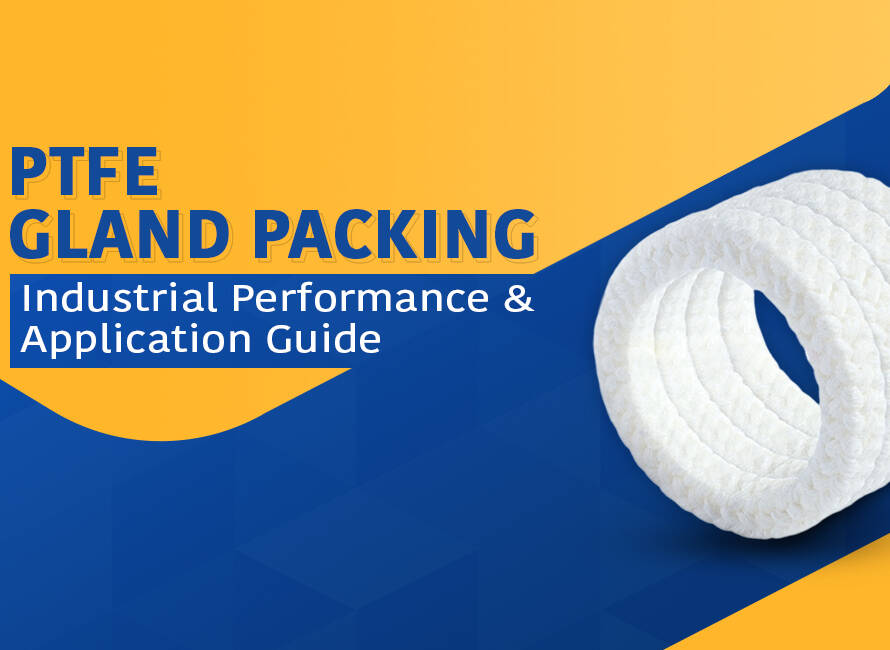
Industrial sealing systems play a critical role in maintaining the efficiency and safety of equipment such as pumps and valves. Among the most widely used sealing solutions is gland packing, a braided sealing material installed around shafts and valve stems to prevent leakage while allowing controlled movement.
Selecting the correct gland packing is essential for ensuring operational reliability, minimizing downtime, and extending equipment life. This gland packing selection guide for industrial use explains the key factors engineers and maintenance teams should consider when choosing sealing solutions for demanding applications.
Why the Wrong Gland Packing Causes Equipment Failures
Using the wrong gland packing can result in several operational problems, including:
- Excessive leakage from pumps or valves
- Overheating of shafts or valve stems
- Increased energy consumption due to friction
- Premature wear of equipment components
- Frequent maintenance shutdowns
In high-pressure or high-temperature environments, an incorrect packing material can degrade rapidly, leading to seal failure. For industries such as power generation, petrochemicals, and chemical processing, selecting the right pump gland packing or valve gland packing is critical for maintaining system integrity.
Key Factors When Selecting Gland Packing
Understanding operating conditions is the first step in choosing the right gland packing solution:
1. Temperature
Temperature is one of the most important considerations. Different materials perform best within specific thermal ranges.
- PTFE packing – suitable for moderate temperatures and chemical environments.
- Graphite packing – ideal for high-temperature applications
- Aramid packing – resistant to heat and abrasion
For extreme environments, high-temperature gland packing made from expanded graphite or carbon fiber is often preferred.
2. Pressure
Industrial systems often operate under high pressure, particularly in power plants and heavy manufacturing.
When evaluating the best gland packing material for high pressure, materials with high structural strength and minimal extrusion are recommended. Reinforced graphite or aramid-based packings typically perform well in these conditions.
3. Shaft Speed
Rotating equipment, such as pumps, requires packing materials capable of handling friction and motion.
High shaft speeds demand packings with:
- Low friction coefficients
- Strong thermal resistance
- High durability under dynamic conditions
PTFE-based or hybrid packings are often used for pump gland packing in high-speed applications.
4. Media Compatibility
The type of fluid being handled, whether water, steam, oil, chemicals, or slurry, also determines the appropriate packing material.
Chemical compatibility ensures that the packing will not degrade when exposed to aggressive substances. For example:
- PTFE is widely used for corrosive chemicals
- Graphite works well with steam and high-temperature fluids
- Aramid is suitable for abrasive media
Pump vs Valve Gland Packing Selection
Although both use braided sealing materials, pumps and valves have different operating demands.
Pump Gland Packing
Pumps involve rotating shafts, which means the packing must:
- Handle continuous movement
- Resist friction and wear
- Maintain controlled leakage for lubrication
Therefore, pump gland packing often uses PTFE-impregnated or hybrid fiber materials.
Valve Gland Packing
Valves operate with reciprocating or static motion rather than constant rotation.
For valve gland packing, key priorities include:
- High-pressure resistance
- Minimal leakage
- Long-term sealing stability
Graphite-based packings are widely used in valves, particularly in steam and thermal systems.
Industry-Specific Requirements
Chemical Industry –
Chemical processing plants require gland packing that can withstand aggressive chemicals and solvents. Materials such as PTFE are widely used because of their strong chemical resistance and low friction properties.
Power Plants –
Power generation facilities operate under extremely high temperatures and pressures, particularly in steam systems. For these environments, high-temperature gland packing made from expanded graphite or carbon fiber is typically the preferred choice due to its thermal stability and sealing performance.
Installation Mistakes to Avoid
Even the best gland packing can fail if installed incorrectly. Some common installation mistakes include:
- Using incorrect packing ring sizes
- Improper cutting or staggering of rings
- Over-tightening the gland follower
- Installing packing without proper lubrication
- Failing to monitor initial leakage and adjustment
Correct installation ensures the packing performs efficiently and reduces premature wear.
How Manufacturers Test Gland Packing Quality
Reliable manufacturers implement rigorous quality testing procedures to ensure product performance.
Typical testing methods include:
- Density and compression testing for structural integrity
- Thermal resistance testing for high-temperature stability
- Leakage and pressure testing under simulated operating conditions
- Chemical compatibility testing with different industrial fluids
These tests help ensure the gland packing meets international performance standards and performs reliably in demanding industrial environments.
Selecting the right gland packing is essential for maintaining the efficiency and safety of industrial pumps, valves, and high-temperature systems. By considering factors such as temperature, pressure, shaft speed, and media compatibility, engineers can significantly reduce equipment failures and maintenance costs.
Whether choosing pump gland packing, valve gland packing, or specialized high-temperature gland packing, working with an experienced manufacturer ensures access to tested materials and application-specific guidance for optimal sealing performance.